Sofia Vogel · 13 September 2026
River Warming Trends Disrupt Aquatic Insect Developmental Cycles in Fresh Data
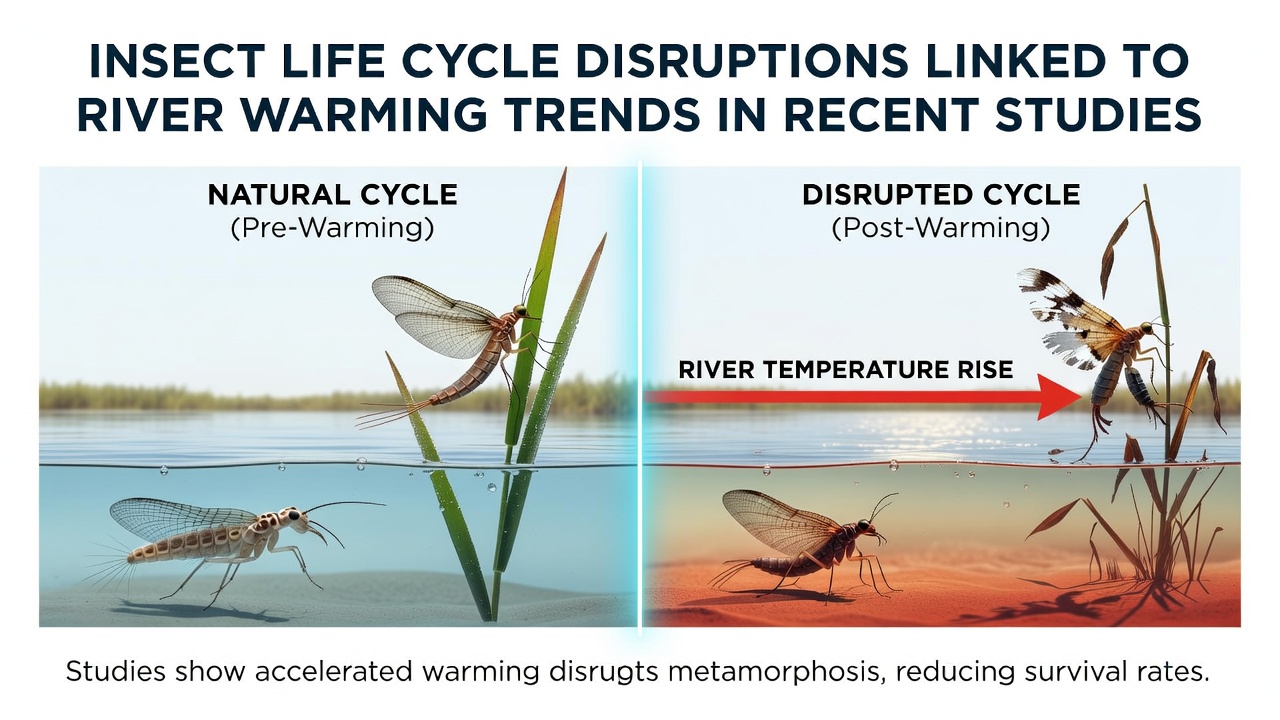
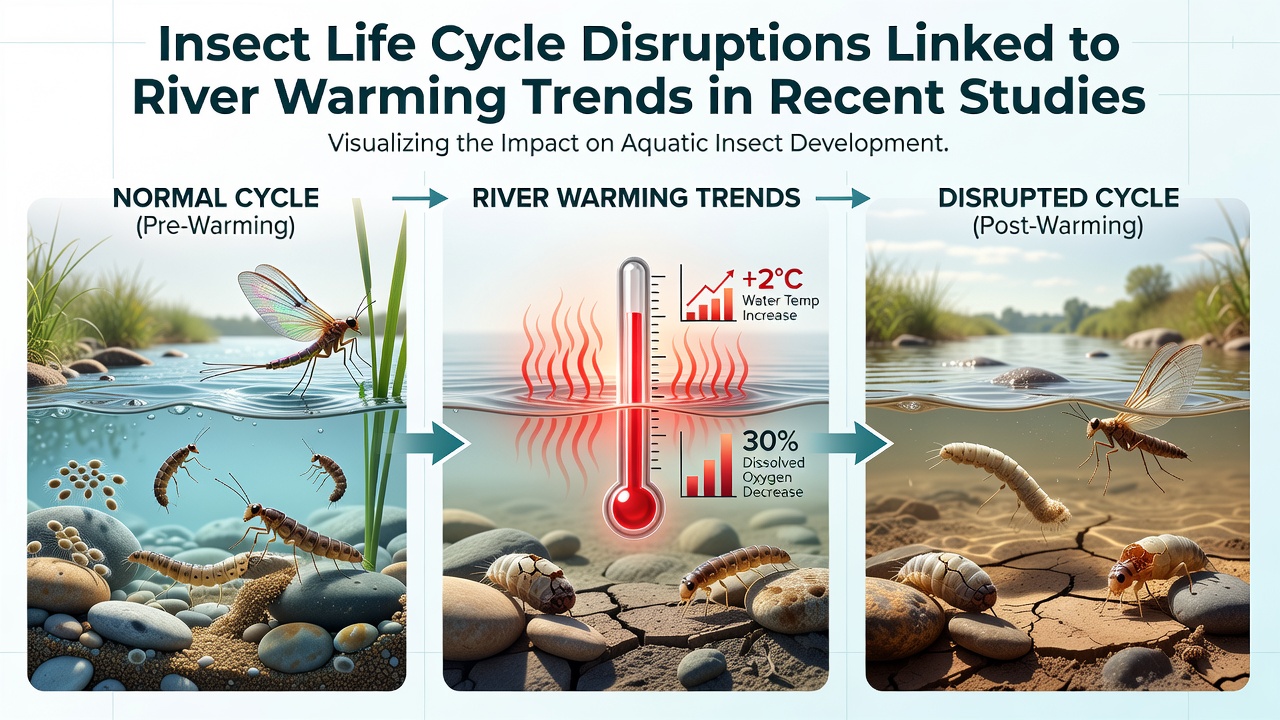
Recent analyses connect rising river temperatures to shifts in the timing and success rates of aquatic insect life cycles, with data from multiple monitoring networks showing accelerated larval development alongside mismatches in adult emergence periods. Scientists tracking species such as mayflies, stoneflies, and caddisflies report that warmer water shortens the duration of immature stages while altering metabolic rates, which in turn affects overall population stability across temperate and boreal river systems.
Observed Temperature Patterns and Insect Responses
Records compiled through 2025 reveal consistent warming in many mid-latitude rivers, where average summer temperatures have climbed by 1.2 to 2.1 degrees Celsius compared with baselines from two decades earlier. These increases correlate with earlier hatching of eggs and faster growth through instars for several common taxa. Yet the same conditions often advance pupation and emergence before peak algal blooms or terrestrial food sources become available, creating gaps that reduce survival for newly emerged adults.
One long-term project along a northern European catchment documented a 12-day advance in peak mayfly emergence between 2010 and 2025, while water temperatures during the critical spring window rose steadily. Similar patterns appear in North American datasets, where USGS stream gauges paired with insect sampling show stonefly cohorts completing their cycles 8 to 15 days sooner in reaches that warmed most rapidly. Researchers note that these timing changes occur even when total degree-day accumulation remains comparable, because the distribution of warm days within the season matters more than the seasonal average alone.
Mechanisms Driving Cycle Disruptions
Higher temperatures elevate metabolic demands during larval periods, prompting faster consumption of stored energy reserves and sometimes triggering premature drift behavior that exposes insects to higher predation. Laboratory experiments confirm that a sustained 2-degree increase shortens the final instar of several caddisfly species by nearly 20 percent, yet field observations indicate that the resulting adults frequently encounter cooler air temperatures or absent mating swarms, lowering reproductive output. Data from Canadian research stations further indicate that species with longer obligatory diapause stages suffer additional stress when autumn cooling arrives later than historical norms, leaving pupae vulnerable to fungal infections in still-warm water.
Community-level responses compound these individual effects. As certain fast-developing taxa gain temporary advantages, slower species decline, reshaping the seasonal availability of insects for fish and riparian birds. Monitoring programs in the Pacific Northwest have recorded reduced densities of late-emerging stoneflies in rivers that experienced the strongest warming signals between 2018 and 2025, while early-emerging midges increased. Such shifts alter energy transfer through food webs without necessarily changing total insect biomass in every case.
Regional Evidence and September 2026 Updates
European Environment Agency summaries released in September 2026 highlight comparable trends across the Danube and Rhine basins, where multi-year temperature logs paired with emergence trap collections show consistent advances in caddisfly flight periods. Australian researchers working on subtropical streams report that some dragonfly species now produce an additional generation per year in reaches where winter minima no longer drop below critical thresholds. These findings align with patterns observed farther north, suggesting teh phenomenon spans climatic zones though the specific taxa affected differ.
Cross-continental comparisons remain limited by varying sampling protocols, yet shared indicators such as first-appearance dates and sex ratios in emergence collections provide useful benchmarks. A collaborative database maintained by several universities now aggregates records from 47 river sites, allowing analysts to test whether flow regime alterations interact with temperature to amplify or dampen life-cycle effects.
Conclusion
Evidence accumulated through 2026 demonstrates clear statistical associations between river warming and altered insect phenology, with consequences that propagate through aquatic and terrestrial food webs. Continued collection of paired temperature and biological data will clarify whether observed disruptions represent temporary adjustments or longer-term reorganization of riverine communities.