Blake Hartmann · 2 September 2026
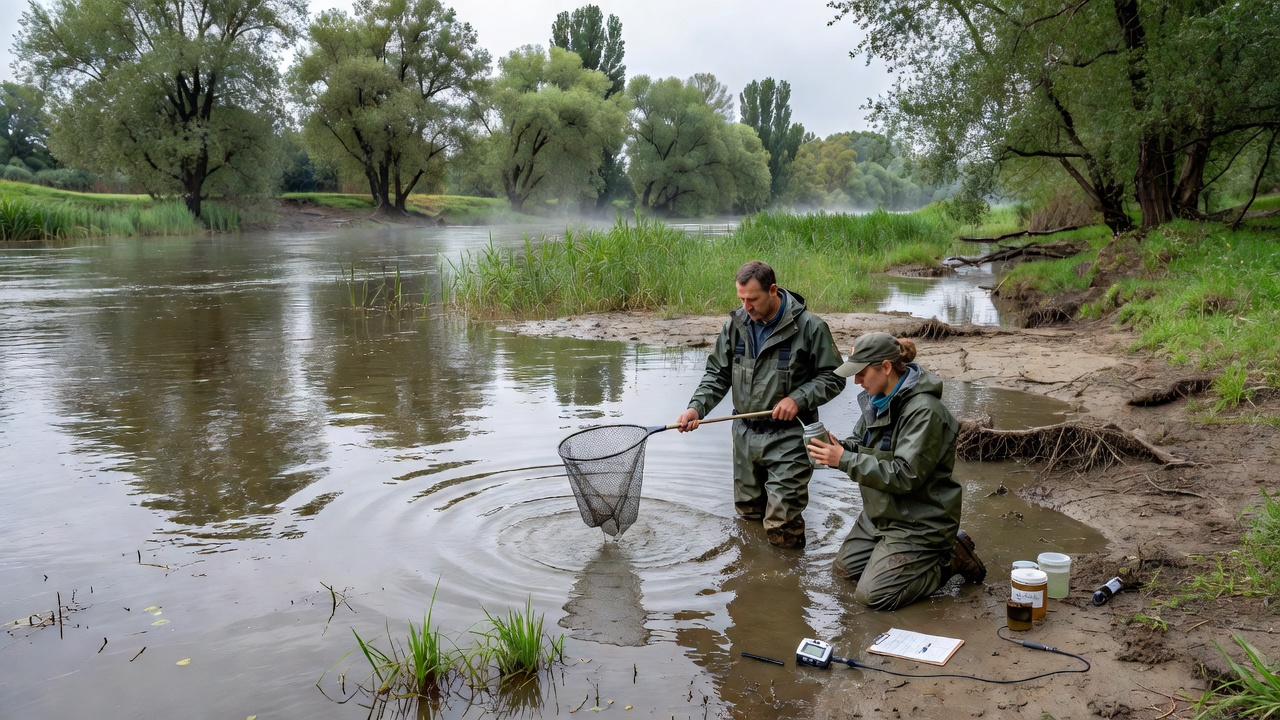
Riverlab researchers have launched intensive field surveys along the Odra River to document biodiversity responses following the summer floods. Elevated water levels and sediment displacement altered habitats across multiple reaches, prompting systematic sampling of fish, macroinvertebrates, and riparian vegetation.
Flood-Induced Changes in Aquatic Habitats
Post-flood assessments revealed reduced oxygen levels in slower-flowing sections and increased turbidity that persisted for several weeks. Native fish species such as barbel and chub showed localized declines, while tolerant cyprinids increased in relative abundance. Macroinvertebrate communities shifted toward burrowing taxa, with sensitive mayfly and stonefly populations dropping by approximately 25 percent in affected tributaries. Riparian zones experienced bank erosion that removed established reed beds, creating opportunities for invasive plant species to colonize freshly deposited sediments.
Water chemistry data collected weekly indicate elevated nutrient loads from agricultural runoff mobilized during the floods. Nitrate concentrations rose 40 percent above pre-flood baselines in the middle Odra, potentially favoring algal growth in the coming season. Sediment cores extracted from depositional zones contain higher proportions of fine particles, which may alter spawning grounds for lithophilic fish species over multiple years.
Biodiversity Assessment Methods and Preliminary Results
Researchers employ standardized electrofishing transects, kick-net sampling, and eDNA metabarcoding to generate comparable datasets across 18 monitoring sites. Preliminary analysis of 2024 samples shows a modest overall decline in Shannon diversity indices for fish assemblages, although total biomass remained stable due to increased numbers of resilient species. Genetic barcoding has identified several non-native invertebrates newly established downstream of flood control structures.
Long-term projections suggest that repeated high-flow events could accelerate homogenization of Odra communities unless connectivity to floodplain refugia is restored. Riverlab plans to continue quarterly surveys through 2026, integrating remote-sensing data on vegetation cover with in-situ measurements. These efforts aim to inform adaptive management strategies that balance flood protection with maintenance of ecological integrity along the river corridor.