Henrik Fischer · 25 October 2026
Building Better Barriers: Expert Guidance for Flood Management in River Communities
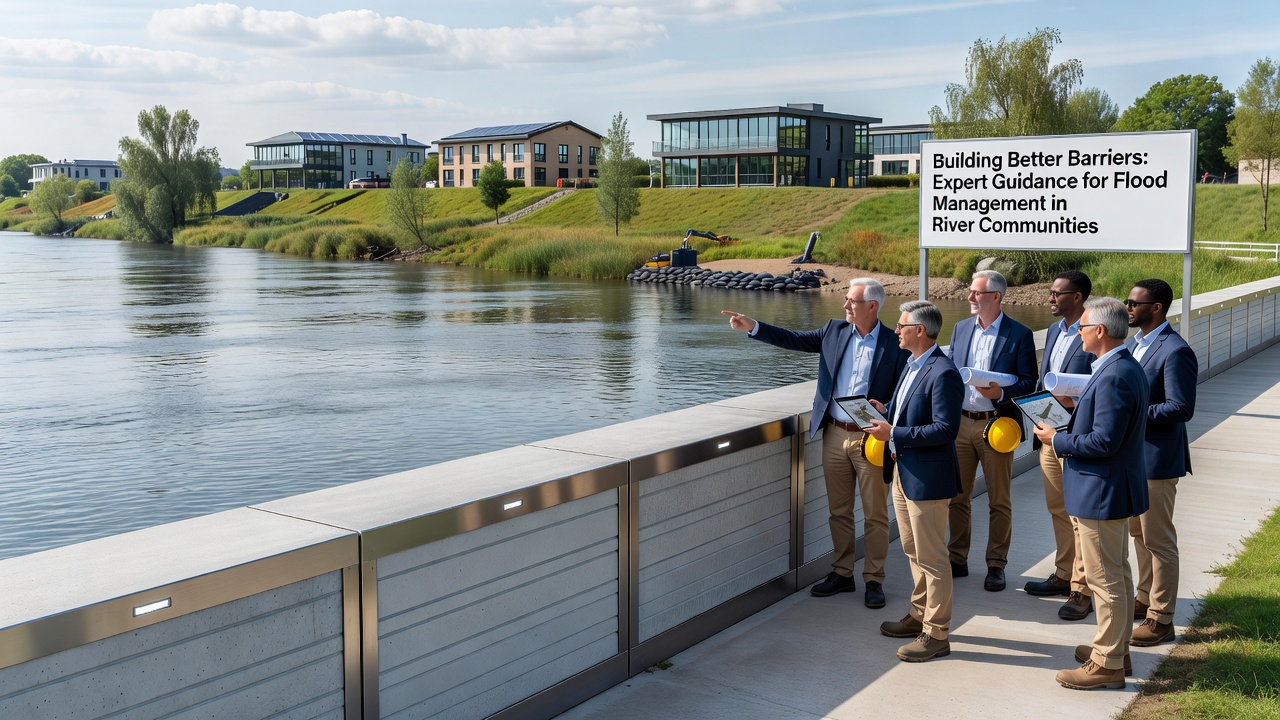
River communities face recurring flood risks that demand engineered solutions built on solid data and tested methods, and barriers such as levees, floodwalls, and berms form the core of many protection strategies. These structures work by containing or redirecting high water flows while integrating with natural floodplain processes where possible. Studies from multiple regions show that well-designed barriers reduce property damage and protect infrastructure when combined with early warning systems and land use planning.
Design begins with site-specific hydrology assessments that map peak discharge rates, sediment loads, and historical flood extents. Engineers calculate freeboard allowances and factor in climate projections that extend through the structure's expected lifespan. According to records maintained by the US Army Corps of Engineers, updated modeling tools have improved accuracy in predicting 100-year and 500-year events across the Mississippi basin and similar large watersheds.
Core Engineering Principles
Stability against seepage and erosion ranks among the primary concerns during barrier construction. Core materials often include compacted clay or synthetic liners that limit water movement through the embankment while outer layers use riprap or vegetation to dissipate wave energy. Geotechnical investigations identify weak foundation soils that require stabilization through deep mixing or sheet pile installation before the main body rises.
Height and alignment decisions incorporate community input and environmental reviews to balance protection with habitat connectivity. Setback distances allow controlled flooding in designated areas that absorb peak flows and reduce pressure on the barrier itself. Data collected after major events in the Rhine catchment demonstrate that such hybrid approaches lowered peak stages downstream compared with fully confined channels.
Materials and Construction Techniques
Modern barriers increasingly incorporate geosynthetics and roller-compacted concrete where traditional earthfill proves impractical due to space constraints or poor borrow sources. Prefabricated elements speed installation in urban riverfronts while maintaining structural integrity under prolonged saturation. Monitoring instrumentation embedded during construction tracks settlement, pore pressures, and movement so maintenance crews can address issues before they escalate.
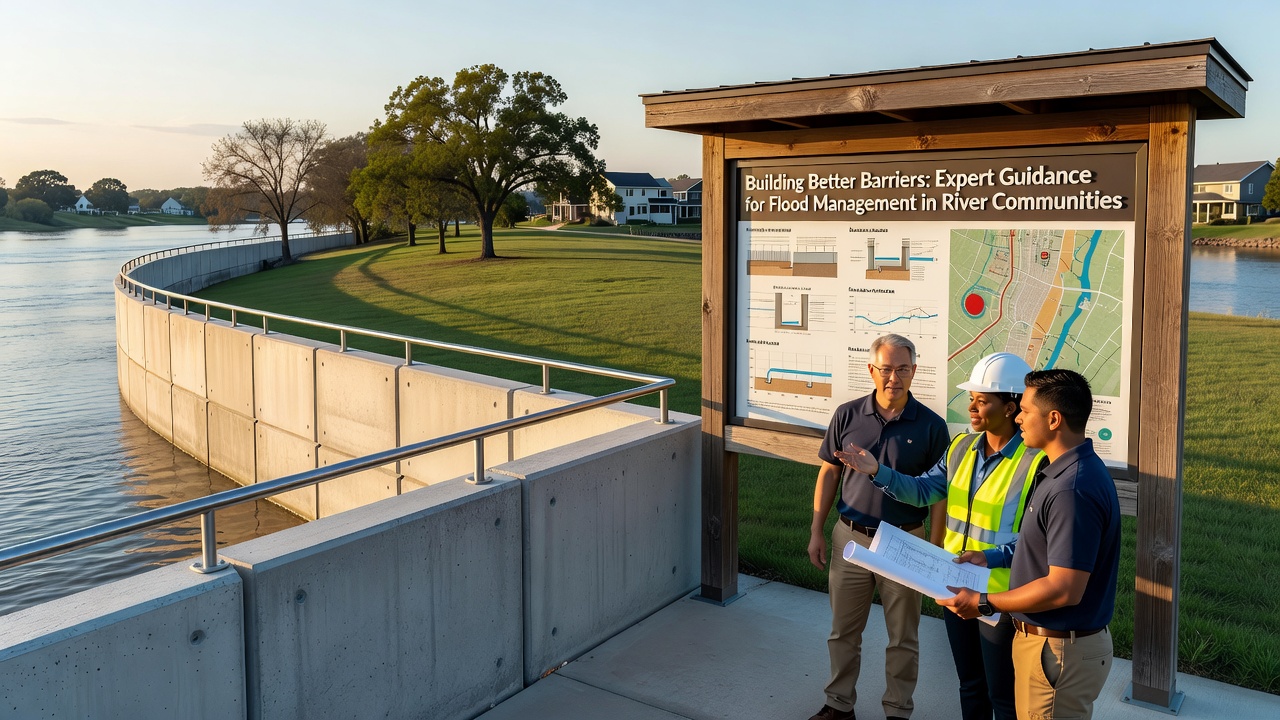
Maintenance schedules follow risk-based protocols that prioritize sections with the highest consequence of failure. Vegetation management prevents root penetration that could create seepage paths, and animal burrows receive prompt filling. Annual inspections combined with periodic full-scale exercises verify that gates, pumps, and closure structures function when needed most.
Integration with Broader Flood Management
Barriers operate within larger systems that include reservoirs, diversion channels, and floodplain restoration projects. Coordinated operations across multiple jurisdictions rely on shared data platforms that update in real time during storm events. European directives on flood risk management encourage member states to maintain consistent standards while allowing flexibility for local geography and development patterns.
Training programs prepare local staff to interpret sensor data and execute emergency protocols. In October 2026 several river basin authorities plan to release revised guidelines that incorporate lessons from recent high-water events and new probabilistic modeling outputs. These updates emphasize adaptive management so barriers can be raised or retrofitted as conditions change.
Case Examples from Different Regions
Along the Missouri River, setback levees constructed after the 2011 floods incorporated wider berms and environmental features that support fish passage during normal flows. Post-construction monitoring recorded reduced maintenance costs and improved habitat metrics compared with older alignments. In Australia, authorities along the Murray-Darling system have tested demountable flood barriers that deploy only during forecasts above certain thresholds, preserving river access for recreation and transport in dry periods.
Canadian projects in the Red River valley use ring dikes around individual communities combined with main stem barriers to manage ice-jam flooding. Performance data collected over multiple seasons indicate that the layered approach limits inundation even when upstream storage capacity is exceeded. Researchers continue to refine crest elevation standards using updated precipitation frequency analyses.
Conclusion
Effective flood barriers emerge from careful integration of engineering data, environmental considerations, and ongoing maintenance commitments. Communities that pair structural measures with non-structural actions such as zoning and insurance programs achieve more resilient outcomes over time. Continued investment in monitoring and periodic upgrades ensures these defenses keep pace with evolving hydrological conditions across river systems worldwide.